
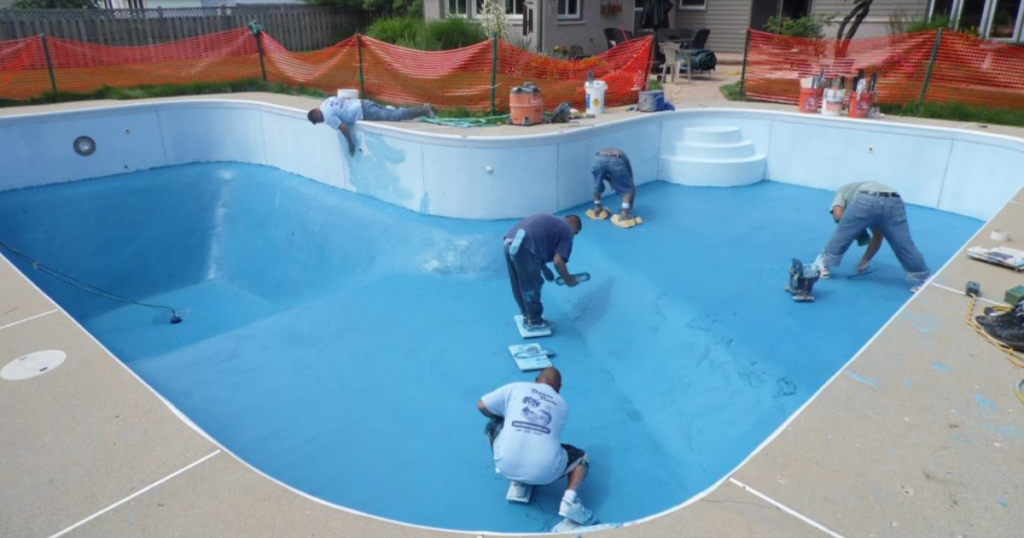
You’ve just had your pool resurfaced, or you’re considering it. And the natural question that follows is: how long is this going to last? It’s the right question to ask before committing to any pool project, because the answer affects your long-term budget planning just as much as the upfront cost. Pool resurfacing doesn’t last the same amount of time for every pool. The finish type, how heavily the pool is used, the quality of the installation, and how consistently the water chemistry is maintained all play a role.
The good news is that when pool resurfacing is done correctly with quality materials, it lasts well beyond most people’s expectations. Here’s a breakdown of what to realistically expect from each type of finish.
Standard White Plaster: The Baseline
Traditional white plaster is the most affordable pool resurfacing option and the one with the shortest lifespan. In pools that see average use with reasonably well-maintained water chemistry, plaster typically lasts between 5 and 10 years before it starts to show roughness, staining, or surface degradation. In Phoenix’s climate, where pools run for long seasons and require higher chemical demand during the peak summer months, plaster tends to age on the faster end of that range. Pool resurfacing with plaster is a legitimate choice when budget is the primary concern, but the shorter service life means you’ll be back to this decision sooner than with other options.
Quartz Plaster: A Meaningful Upgrade
Quartz plaster blends quartz aggregate into the plaster matrix, which significantly improves stain resistance, color retention, and durability under chemical exposure. Pool resurfacing with a quartz finish typically lasts 10 to 15 years, which is a meaningful improvement over standard plaster for a moderate increase in cost. For homeowners who want a longer lifespan without moving all the way to a premium pebble finish, quartz is a solid middle-ground option.
Pebble and Aggregate Finishes: The Long-Term Investment
Mini pebble and aggregate finishes are consistently the top-performing options in terms of longevity. A quality pebble finish applied over a well-prepared shell can last 15 to 25 years or more when the pool chemistry is kept in balance. The aggregate material is harder and denser than plaster, making it more resistant to chemical etching, UV-related fading, and the physical wear that comes with heavy pool use. For Arizona homeowners with pools that get significant use from spring through fall, pebble finishes represent one of the best long-term values in pool resurfacing options.
What Shortens the Life of Any Pool Surface
Regardless of the material used, certain conditions accelerate surface wear. The biggest factor is water chemistry imbalance. A pool that regularly runs with pH levels outside the recommended range of 7.4 to 7.6 experiences much faster surface deterioration than one that’s kept in balance. Low pH is particularly damaging to plaster and quartz surfaces because the acidic water actively etches the material. High pH leads to calcium scaling that stains and roughens the surface over time.
Heavy bather load is another factor. A pool that holds large groups frequently throughout the swim season has more physical and chemical demand on the surface than one that sees moderate use. And a pool that sits unused with unmanaged chemistry for extended periods can develop problems quickly regardless of what it’s finished with.
Signs It’s Time to Resurface
The most common sign that pool resurfacing is overdue is texture. When the interior starts feeling rough underfoot, that roughness will scratch skin during normal swimming and signals that the surface has worn through. Stubborn staining that doesn’t respond to chemical treatment, visible delamination or chipping, and unexplained water loss are other reliable indicators.
At Toros Pool Decking, we assess pool interiors honestly and recommend resurfacing timelines based on actual surface condition, not a fixed schedule. If your pool is showing signs of wear, we’ll tell you what it needs and give you options that fit both your timeline and your budget.
Want to know specifically how long your pool resurfacing should last? Contact us for a free surface assessment and honest guidance.