
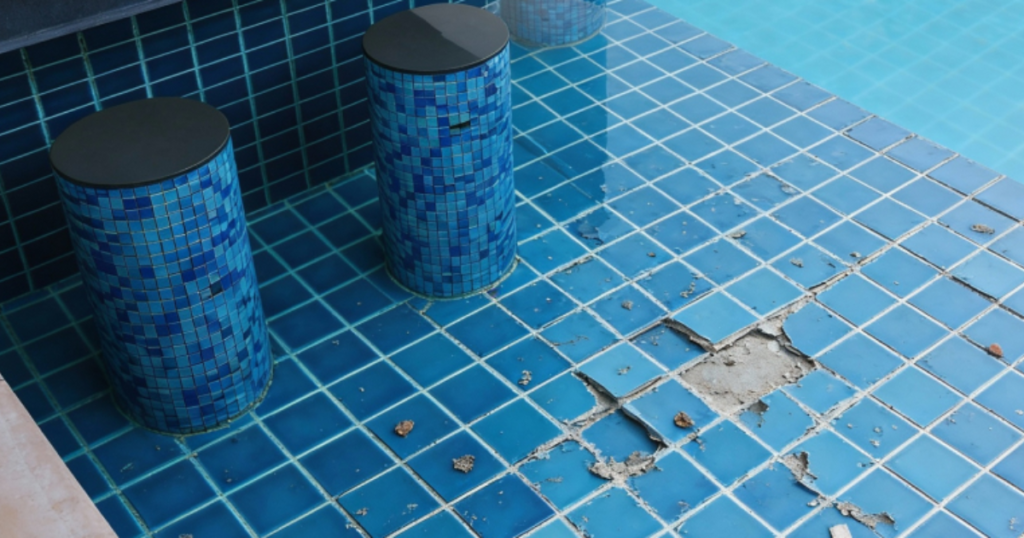
You step out to your pool on a sunny afternoon and notice it immediately. A tile is gone. Maybe a few. Or there’s a crack running through what used to be a clean, polished waterline. It’s one of those things that’s easy to ignore for a while, but understanding why pool tiles crack or fall off is actually more important than most homeowners realize. Because in most cases, it doesn’t just happen on its own.
There are real, specific reasons behind tile failure, and when you know what they are, you can stop the problem from coming back after a repair. Whether you’ve got one loose tile or a waterline that’s in serious trouble, this breakdown will walk you through what’s actually going on and what you should do next.
Heat And Thermal Movement
This is the number one culprit in warm climates like Arizona. Pool tiles crack when the concrete or mortar beneath them expands and contracts repeatedly with heat and temperature changes. Over years of summer heat followed by cooler nights and seasonal shifts, that constant movement creates stress on the bond between tile and shell. The adhesive can only take so much before it starts to give.
This is also why the type of bonding mortar used during installation matters so much. An adhesive that isn’t rated for exterior thermal stress in a high-sun environment will fail much faster than one designed specifically for it. In the Tempe area, where temperatures swing dramatically between peak summer and winter nights, this issue is more pronounced than in milder climates.
Water Getting Behind The Tile
If there are small cracks in the grout between your tiles, water finds its way in. Once water gets behind the tile, it expands when it warms up and puts pressure on the bond from the inside. This is one of the most common explanations for why pool tiles fall off in sections rather than individually. You get one tile loose, water enters that gap, and soon the surrounding tiles start to go too. What started as a one-tile fix becomes a much larger repair.
Low Water Levels And Exposed Tile
When pool water levels drop and the waterline tile is left exposed to direct sunlight for extended periods, the thermal stress on that section of tile becomes extreme. This is a frequently overlooked cause of pool tiles cracking. The tile is designed to sit at the waterline, where the water itself provides some temperature regulation. Take that away, and the tile takes the full force of the sun with no buffer.
If you’re going away for a period, or if your pool loses water quickly due to evaporation or a leak, keeping the water topped up is a simple way to protect the tile.
Poor Installation From The Start
Sometimes the answer to why pool tiles fall off is straightforward. They were never installed correctly. Using the wrong adhesive, skipping surface preparation, applying tile to a damp substrate, or rushing the grouting process all create conditions where early failure is almost inevitable. A tile that was installed with shortcuts will show problems within a season or two regardless of how otherwise well-maintained the pool is.
The materials used for setting tile are just as important as the tile itself. Exterior-rated, polymer-modified mortar and grout designed specifically for pool environments behave very differently from standard indoor tile products. Using the wrong one in a pool application is a recipe for early failure.
Outdated Tile That Has Reached The End Of Its Life
Pool tile generally lasts around 20 years when properly installed and maintained. After that, even tile that was originally set correctly starts to show its age. Fading, dullness, visible pitting, and increased sensitivity to thermal movement are all signs that the tile has simply run its course. At that point, asking why pool tiles crack or fall off has a simpler answer: they’ve been there long enough.
If your pool tile is more than 15 to 20 years old and you’re seeing increasing numbers of loose or missing tiles, the most practical move is a full waterline tile replacement rather than repeated spot repairs that only buy a little more time.
What You Should Do
Small tile losses can sometimes be addressed with targeted repairs. Larger or recurring failures usually point to a systemic issue with the original installation or the bonding system, and those require a proper fix rather than a patch.
At Toros Pool Decking, we inspect the full waterline, identify what’s causing the failure, and fix it with the right materials the first time. If your pool is losing tiles and you want it addressed correctly, reach out for a free estimate. If you’ve been wondering why pool tiles crack or fall off at your home, contact us today for a free on-site assessment and a proper, lasting fix.